The commercial real estate landscape in Metro Atlanta is undergoing a seismic structural shift. While traditional brick-and-mortar storefronts face prolonged headwinds from shifting consumer habits, an opposite force is surging: the hyper-localization of healthcare services.
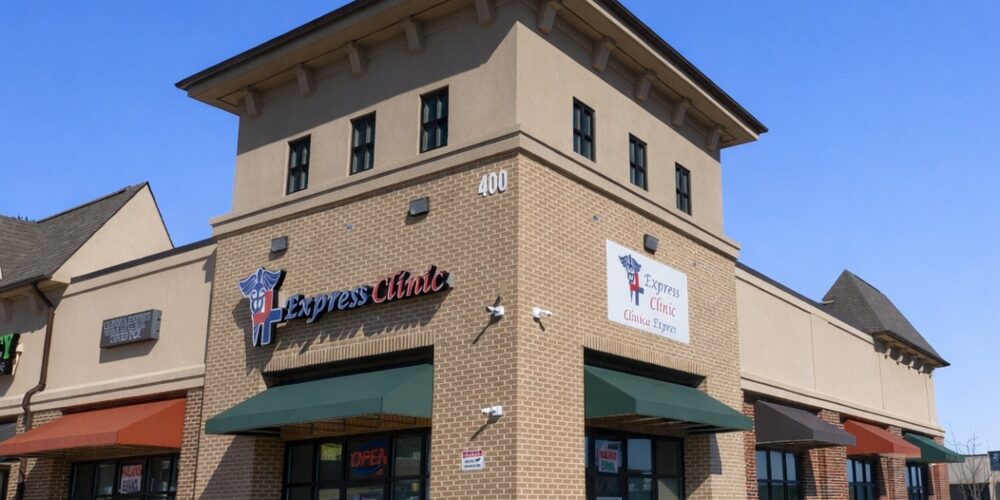
Driven by macro trends in consumer-centric care, developers across North Georgia are identifying high-yield opportunities in adaptive reuse. Specifically, converting underperforming retail “big boxes,” strip centers, and traditional offices into specialized medical facilities—popularly dubbed the “medical mall” phenomenon—has emerged as a highly resilient investment strategy.
For commercial real estate developers, investors, and general contractors, transitioning a property from a standard retail footprint to a fully compliant medical office building (MOB) or urgent care center requires far more than cosmetic alterations. It demands a rigorous understanding of clinical workflows, strict regulatory compliance, and intensive structural adaptations.
The Market Forces: Why Atlanta is Prime for Retail-to-Medical Conversions
The intersection of shifting work models and decentralized healthcare has fundamentally altered real estate valuations. According to macroeconomic analyses by major commercial real estate services firms like CBRE, traditional office spaces nationally face elevated vacancy rates, while the demand for outpatient services has climbed by over 66%.
In dynamic, sprawling metropolitan areas like Atlanta—encompassing rapidly growing nodes from Buckhead and Midtown out to suburban hubs like Alpharetta, Marietta, and Gwinnett—the “retail-to-medical” model solves problems for multiple stakeholders:
- For Communities: It introduces accessible, regional care closer to where people live, eliminating the friction of navigating dense, centralized hospital campuses.
- For Property Owners: It replaces volatile, short-term retail leases with stable, long-term, high-credit medical tenants. Research confirms that medical tenants frequently pay premium base rents when positioned near high-quality healthcare networks, generating a powerful “reputation spillover” that enhances surrounding property values.
- For Healthcare Providers: Repurposing an existing retail structure significantly cuts down on speed-to-market compared to ground-up construction.
At RTF, we specialize in navigating the granular construction and engineering complexities required to bridge these two distinct asset classes. Whether you are expanding your portfolio into decentralized retail spaces or engineering state-of-the-art medical buildings, understanding the technical prerequisites of adaptive reuse is crucial for project viability.
The Adaptive Reuse Blueprint: Key Engineering & Structural Challenges
Converting a standard commercial space into an active clinical environment means transforming a structure designed for low-density foot traffic into an advanced, high-utility facility. Below are the critical technical areas developers must address during the feasibility and pre-construction phases.
1. Structural Load Allocations and Floor Vibrations
Standard retail layouts are typically engineered for uniform live loads of approximately 50 to 100 pounds per square foot (psf). While this is perfectly adequate for apparel displays or light inventory, specialized medical equipment presents a vastly different structural profile.
Heavy diagnostic imaging machinery—such as magnetic resonance imaging (MRI) units, computed tomography (CT) scanners, and digital X-ray suites—can weigh several tons. This equipment requires structural retrofitting to support localized floor loads often exceeding 200 to 250 psf.
Furthermore, sensitive diagnostic instruments are highly vulnerable to structural vibrations caused by nearby vehicular traffic or mechanical systems. Engineers must conduct formal vibration analyses and implement isolation slabs or structural steel reinforcements to ensure reading accuracy.
2. Specialized HVAC and Environmental Control Systems
Perhaps the most capital-intensive component of a medical conversion is the overhaul of the heating, ventilation, and air conditioning (HVAC) systems. Standard retail zones prioritize basic thermal comfort, often utilizing shared air zones and simple rooftop units (RTUs).
In sharp contrast, medical office environments must comply with rigid infection control protocols. Clinical spaces mandate:
- Higher air exchange rates (total air changes per hour, or ACH).
- Dedicated positive or negative pressure zones (e.g., keeping waiting rooms isolated from clean clinical supply areas).
- Advanced filtration matrices, such as HEPA filters, to capture airborne pathogens.
- Independent zoning controls to manage the distinct thermal environments required for patient exam rooms, staff offices, and laboratory spaces.
3. Plumbing, Fluid Management, and Medical Gas Infrastructure
A retail storefront typically concentrates plumbing infrastructure at the rear or in centralized core restrooms. A medical floor plan completely decentralizes these requirements.
Every patient examination room, procedure space, and laboratory zone requires dedicated handwashing stations to comply with OSHA and local healthcare ordinances. This requires extensive sub-slab trenching or the installation of specialized graywater pump systems to route drainage through concrete floors.
Additionally, if the facility operates as an advanced urgent care or ambulatory surgery center, developers must integrate dedicated medical gas plumbing lines (such as oxygen and nitrous oxide) alongside specialized hazardous waste management systems.
Navigating Regulatory Compliance and Healthcare Zoning in Georgia
Building a medical space in Georgia means navigating layered regulatory environments that do not apply to standard commercial storefronts.
Zoning and Land Use Reclassification
Even if a property is zoned for general commercial use (C-1 or C-2 in many Atlanta municipalities), specific local ordinances may restrict medical services or overnight observation. Parking ratios also change significantly: retail properties typically require 4 spaces per 1,000 square feet, whereas high-volume outpatient medical buildings often demand 5 to 6 spaces per 1,000 square feet to accommodate patients, administrative staff, and mobile medical units.
National Fire Protection Association (NFPA) & Life Safety Codes
Healthcare facilities must meet stringent Life Safety Codes (NFPA 101). Depending on whether the facility is classified as a Business Occupancy (standard physician offices) or an Ambulatory Health Care Occupancy (urgent care centers where patients may be rendered incapable of self-preservation), the building must feature specific fire-rated partitions, dedicated smoke barriers, and expanded corridor widths to allow for emergency gurney clearance.
Patient Privacy and Accessibility
The physical layout must preserve patient privacy under HIPAA guidelines, meaning interior wall assemblies between exam rooms require advanced Sound Transmission Class (STC) ratings—often requiring double-layer drywall installations and acoustic insulation. Simultaneously, strict Americans with Disabilities Act (ADA) compliance is non-negotiable, dictating automatic entry doors, specialized zero-threshold ramps, and expanded restroom turning radii.
Maximizing ROI: The Strategic Advantage of Partnering with RTF
Converting an underperforming retail center into a thriving medical facility is one of the most effective ways to recession-proof a commercial real estate portfolio in Atlanta. However, because healthcare construction carries tight margins for engineering errors, working with an experienced partner is critical.
At RTF, we systematically bridge the gap between initial commercial site selection and complex medical delivery. Our integrated pre-construction and design-build services identify structural bottlenecks before the first hammer swings, keeping your adaptive reuse project on time, within budget, and fully compliant with Georgia healthcare standards.