Jack and bore tunneling is one of the most effective trenchless construction methods for installing underground utilities beneath roadways, railroads, and existing infrastructure. But while the technique is widely respected for minimizing surface disruption, it also introduces a unique set of technical and safety challenges that demand rigorous planning, engineering precision, and strict adherence to safety standards.
At RTF Construction, jack and bore operations are treated as a discipline—not just a construction task. From soil analysis and equipment selection to worker protection and real-time monitoring, every step is governed by proven safety and efficiency protocols. These practices not only protect crews in high-risk environments, but also ensure predictable schedules, precise alignments, and long-term infrastructure performance.
This article takes a deeper, more technical look at jack and bore safety standards, operational best practices, and how OSHA-aligned protocols drive both safety and efficiency in trenchless tunneling projects.
Why Jack and Bore Requires Specialized Safety Protocols
Unlike open-cut trenching, jack and bore operations occur in confined, pressurized, and often low-visibility environments. Workers and equipment operate below grade, sometimes beneath active roadways or rail corridors, where tolerance for error is virtually zero.
Common risk factors include:
- Ground instability or unexpected soil conditions
- Equipment misalignment or mechanical failure
- Confined space hazards
- Exposure to utilities or groundwater
- Limited access and egress points
Because of these risks, jack and bore tunneling demands a higher level of procedural discipline than many other underground construction methods.
OSHA’s Role in Jack and Bore Safety
The Occupational Safety and Health Administration (OSHA) provides the foundational framework for safe underground and trenchless construction operations. While OSHA does not regulate jack and bore tunneling as a single standalone category, multiple OSHA standards apply directly to these projects, including:
- Excavation and trenching standards (29 CFR 1926 Subpart P)
- Confined space regulations
- Heavy equipment operation requirements
- Fall protection and access controls
- Hazard communication and training protocols
At RTF Construction, OSHA guidelines are integrated into every jack and bore project—not as a checklist, but as a baseline for comprehensive risk management.
Pre-Construction Planning: The First Line of Safety
1. Subsurface Investigation and Soil Analysis
Safety and efficiency begin long before the bore pit is excavated. A detailed geotechnical investigation helps identify:
- Soil composition and density
- Groundwater presence
- Potential obstructions
- Load-bearing characteristics under existing infrastructure
Accurate soil data informs casing selection, boring method, jacking force calculations, and pit design. This reduces the risk of ground loss, settlement, or bore deviation—each of which can create serious safety hazards.
2. Bore Pit and Receiving Pit Design
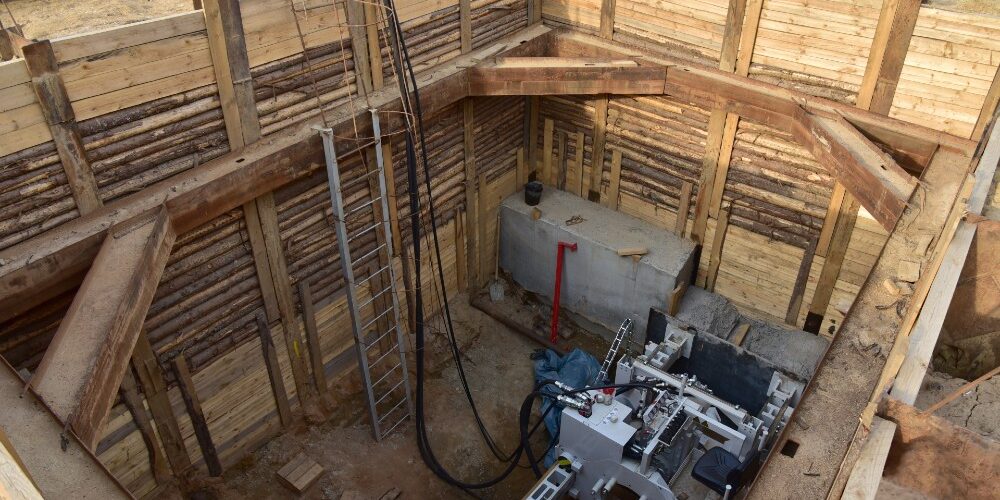
OSHA-compliant pit design is critical. Jack and bore pits must be engineered to:
- Withstand lateral soil pressure
- Support jacking equipment loads
- Provide safe access and egress
- Prevent cave-ins or wall failure
RTF Construction designs pits with structural integrity as a top priority, incorporating shoring systems, reinforced walls, and access controls that exceed minimum safety standards when conditions require it.
Equipment Selection and Alignment Controls
Precision Matters Underground
Misalignment during jack and bore operations can lead to:
- Structural stress on casing pipes
- Equipment binding or failure
- Surface settlement
- Safety risks for workers inside the bore pit
To mitigate these risks, RTF Construction employs:
- Laser-guided alignment systems
- Continuous monitoring of line and grade
- Incremental jacking procedures
- Regular calibration checks
These controls not only improve accuracy but also enhance safety by reducing corrective interventions mid-operation.
Confined Space Safety in Jack and Bore Operations
Recognizing the Hazard
Jack and bore environments often meet OSHA’s definition of a confined space, which means:
- Limited entry and exit points
- Potential for hazardous atmospheres
- Increased risk during emergencies
Key Confined Space Protocols Include:
- Air quality monitoring
- Ventilation systems
- Emergency rescue planning
- Worker training and certification
- Clear communication protocols
RTF Construction treats confined space safety as non-negotiable, ensuring crews are trained, equipped, and supported at every stage of the operation.
Worker Protection and Training Standards
Skilled Crews Are a Safety Asset
Jack and bore tunneling is not a task for untrained labor. OSHA emphasizes the importance of competent personnel, and RTF Construction reinforces this by:
- Utilizing experienced tunnel crews
- Conducting job-specific safety briefings
- Implementing daily hazard assessments
- Maintaining clear supervisory oversight
From equipment operators to pit personnel, every team member understands their role, the risks involved, and the protocols in place to mitigate those risks.
Monitoring Ground Movement and Infrastructure Integrity
One of the most critical safety concerns in jack and bore tunneling is protecting the infrastructure above.
RTF Construction implements monitoring strategies such as:
- Surface settlement monitoring
- Load tracking during jacking operations
- Visual inspections of surrounding structures
- Immediate response protocols if movement is detected
These measures protect roadways, rail lines, and nearby utilities—while also safeguarding workers underground.
Efficiency Through Safety: Why the Two Are Linked
In jack and bore operations, safety and efficiency are not competing priorities—they are deeply connected.
Projects with strong safety protocols experience:
- Fewer stoppages
- Less rework
- Reduced equipment downtime
- Improved schedule predictability
- Lower overall project risk
By following OSHA-aligned procedures and proactive risk management, jack and bore projects move forward with confidence instead of reactionary problem-solving.
Building on Proven Jack and Bore Expertise
RTF Construction’s approach to jack and bore tunneling builds on years of hands-on experience, engineering collaboration, and field-proven best practices. Our existing work in this space reflects our commitment to both technical excellence and uncompromising safety.
Final Thoughts: Precision Below Ground Starts with Protocol
Jack and bore tunneling is as much about discipline as it is about engineering. When safety standards are embedded into every phase—from planning and pit design to execution and monitoring—the result is a project that performs efficiently, protects workers, and preserves surrounding infrastructure.
At RTF Construction, OSHA guidelines are not viewed as a ceiling, but as a foundation. By combining regulatory compliance with field expertise and technical rigor, we deliver jack and bore solutions that meet the highest standards of safety and performance.
If your project demands trenchless expertise with no margin for error, RTF Construction is built for the challenge.