In the restaurant business, ambiance can be as crucial as the menu in drawing customers through the door and keeping them coming back. A well-designed space creates an atmosphere that enhances the dining experience, and for patrons, this atmosphere often becomes as memorable as the food. Today’s design trends in restaurant interiors reflect the shift toward creating spaces that are cozy yet stylish, trendy yet timeless. As a company that has helped bring these visions to life, including for North Decatur’s beloved Mason Tavern, we at RTF Construction know firsthand what goes into crafting a space that resonates with customers.
Let’s explore the latest design trends in restaurant renovations and how they can be used to create an inviting and memorable atmosphere for diners.
1. Bold and Earthy Color Schemes
The color scheme of a restaurant is essential in setting the tone for the experience. In recent years, restaurants have moved away from stark whites and pastels in favor of more grounded, earthy tones that create a sense of warmth and authenticity. Popular colors include deep greens, rich browns, and warm tans. These tones often evoke nature and comfort, which can be inviting to customers who want to feel relaxed and at home while dining.
For Mason Tavern, this approach is evident in its use of warm, chocolate-toned leather booths and the earthy tones of its charred wood accents. The rich hues in the booth and table design contribute to a cozy, intimate feel, giving patrons a sense of retreat from the busyness outside. This use of color exemplifies how strategic tones can provide a visually warm atmosphere, creating a space that diners are eager to return to.
2. Textured, Natural Materials
There’s a growing trend toward using materials that feel genuine and textured, adding depth and dimension to a restaurant’s interior. Many restaurants are now incorporating materials like distressed leather, charred wood, reclaimed metals, and exposed brick, which not only look authentic but also provide tactile experiences that complement the visual.
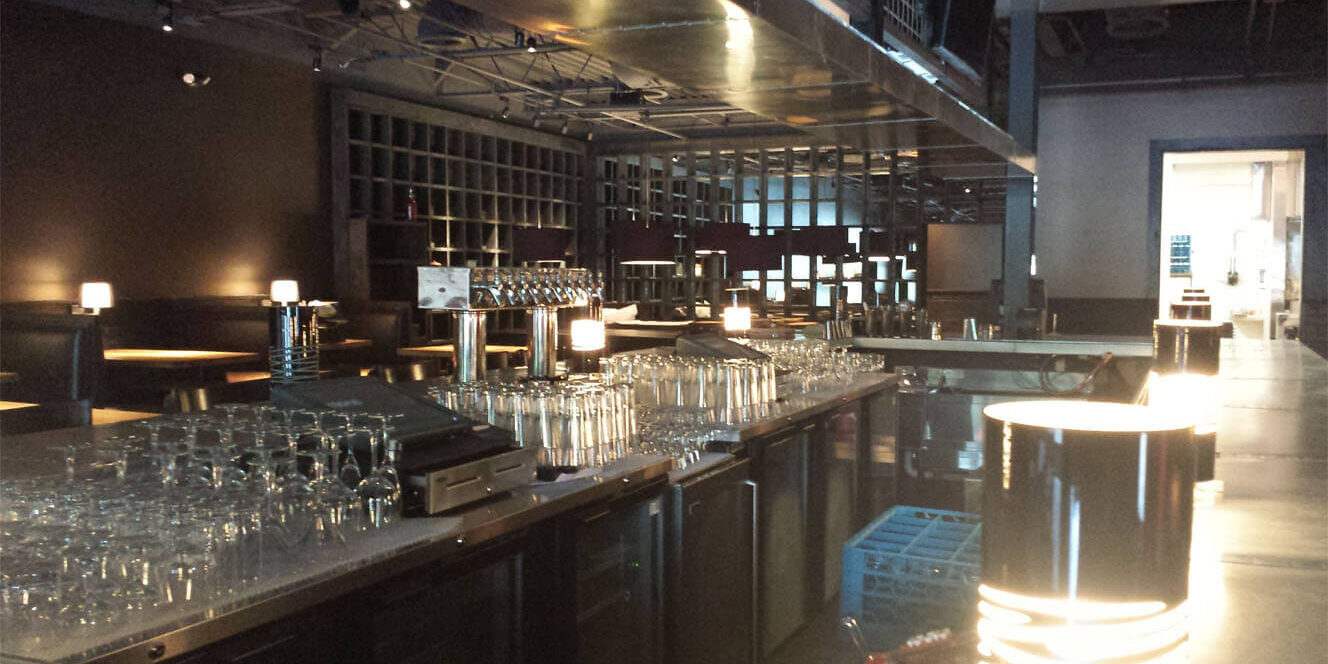
At Mason Tavern, RTF incorporated distressed leather booths, polished metal accents, and tables with hickory tops. Each material has a unique texture that not only looks appealing but also feels substantive and grounded. The rustic charm of railroad ties used in the central bar structure is a testament to this trend of using materials that bring character and history to the space. By embracing these natural elements, Mason Tavern embodies a warmth and authenticity that patrons find comforting and welcoming.
3. Dynamic Lighting for an Engaging Atmosphere
Lighting is a crucial element that can shape the mood in any dining area. Today’s restaurant designs embrace versatile lighting solutions that can shift throughout the day, from bright, natural light during brunch hours to softer, more intimate lighting for evening dinners. Lighting can highlight certain areas of the restaurant, such as the bar, making them focal points in the design.
In Mason Tavern, industrial-style lighting works in tandem with natural light streaming in from large garage doors, creating a space that feels both open and inviting. These doors connect the indoor and outdoor spaces, making the most of the restaurant’s patio-friendly design. At night, the lighting around the bar shifts to create a warm, cozy glow, making it an ideal gathering place. This layering of light helps create a versatile space that feels dynamic, evolving with the time of day and adapting to the mood.
4. Industrial Elements Balanced with Warm Touches
The industrial style has been a favorite in restaurant design for a while, and today’s trends enhance it with touches that soften the look and feel. Exposed pipes, concrete floors, and raw metal finishes can create a contemporary look that feels chic and urban. However, without the right balance, an industrial style can sometimes feel cold. To counter this, restaurants now pair these elements with softer, warmer features.
At Mason Tavern, industrial aesthetics—like the polished metal finishes and central bar built from railroad ties—are thoughtfully paired with more comforting elements, such as leather and wood, which soften the space and make it feel accessible rather than austere. Industrial garage doors add to this modern look but are combined with the natural, welcoming feel of hickory tabletops and leather booths. This balance of hard and soft elements creates an atmosphere that feels upscale yet inviting, aligning perfectly with the relaxed vibe of a modern tavern.
5. Multi-Functional Seating Arrangements
Diners appreciate spaces that offer a variety of seating options, from intimate booths for private gatherings to communal tables that foster a more social experience. Having a mix of seating types allows restaurants to cater to a wide range of guests, whether they’re there for a quick solo meal, a group outing, or a romantic dinner.
In Mason Tavern, the seating plan includes cozy, distressed leather booths that provide a sense of seclusion, while more open areas near the bar are ideal for mingling. The flexibility of the seating accommodates everyone, from regulars who want their “usual spot” to newcomers exploring different areas of the restaurant. This approach to seating also helps create a versatile atmosphere that appeals to a variety of patrons.
6. Indoor-Outdoor Flow
A seamless indoor-outdoor flow has become a top design priority, especially in the era of flexible dining preferences. Restaurants are investing in design elements that bring the outdoors in or allow for quick transitions between indoor and outdoor spaces. This trend can be seen in large windows, garage-style doors, and patios that merge with the dining room to give patrons more dining options.
Mason Tavern’s industrial garage doors are a perfect example of how this trend can be implemented. These doors open up to bring natural light into the space and extend the patio experience indoors. This design feature enhances the sense of openness and connection with the surroundings, a quality that resonates with diners seeking a relaxed, accessible environment.
7. Artful and Subtle Branding Elements
Finally, more restaurants are incorporating subtle branding into their design, using the physical space to tell a story that resonates with their unique brand identity. This can be achieved through customized design features, like branded wall art, bespoke furniture, or distinctive architectural details that reflect the restaurant’s story and personality.
At Mason Tavern, the blend of local influences in both design and menu choices speaks to the restaurant’s roots in the Atlanta area and its dedication to using locally sourced ingredients. The use of polished metals and natural wood accents reflects the restaurant’s contemporary, sophisticated, yet approachable brand, inviting patrons to relax and stay a while. This is an excellent example of how subtle branding elements within a space can enhance the dining experience and create a memorable identity.
Ready to Bring Your Vision to Life?
Creating a warm, inviting atmosphere in a restaurant is about more than just choosing the right paint color or furniture; it’s about crafting a space that tells a story and resonates with customers. At RTF Construction, we understand how to bring these elements together to create spaces like Mason Tavern that are not only visually stunning but also functional and reflective of the restaurant’s unique brand.Are you ready to transform your restaurant into an unforgettable dining experience? Whether you’re envisioning a trendy new design or a cozy update to an existing space, RTF Construction can help make it a reality. Reach out to us today to discuss your project and see how we can bring your vision to life. Let’s create a space that draws customers in and makes them feel right at home.